

Introduction

Pipeline valves play an essential role in controlling and isolating sections of an oil and gas system. Whether crews are responding to an emergency or preparing for planned maintenance downstream, they need confidence that a closed valve is providing the isolation required for the work to proceed safely.

In most cases, a properly maintained valve will provide that seal. But valves operate in demanding environments, and over time, contamination, seat damage, wear, or other conditions can allow pipeline contents to continue passing even when the valve is fully closed.

When conventional cleaning, lubrication, and sealing methods are unable to restore the required isolation, operators may need to consider a more specialized approach. Critical Valve Sealing is one technique that can be used in certain ball and gate valve applications to establish temporary isolation and allow downstream work or emergency response to move forward without shutting down a larger section of the pipeline.

To explore the process in more detail, we spoke with our in-house valve maintenance expert Joe Santos about when critical valve sealing may be appropriate, how the procedure differs from conventional valve maintenance, and the factors operators need to consider before proceeding.

What Is Critical Valve Sealing?

To understand how critical valve sealing differs from routine valve maintenance, it helps to first look at conventional valve servicing. Routine maintenance typically involves injecting various cleaners, lubricants, or sealants through a valve’s seat injection system. These products can help remove contamination, improve seat performance, and address certain types of leakage.

Critical valve sealing takes a different approach.

Instead of injecting sealing material through the seat injection ports, the sealant is introduced directly into the valve body cavity, typically through the body drain fitting at the bottom of the valve.
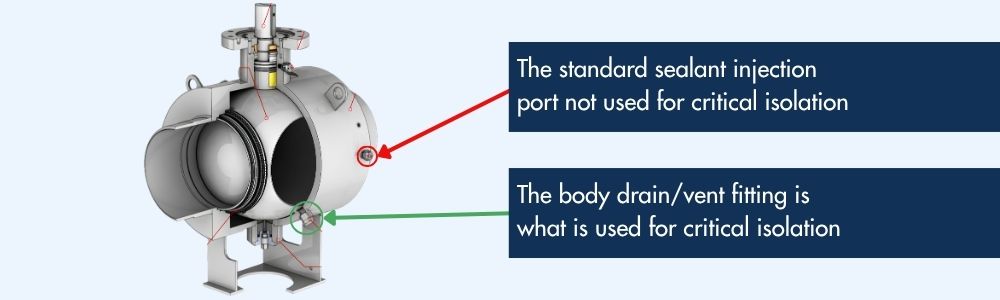
The objective is to fill the valve body cavity with a calculated volume of specialized sealing material to create a temporary barrier against pipeline contents passing across the valve seats when the valve is closed.

Sealweld’s Chameleon Sealant emergency sealant is specifically designed for severe valve leakage after other sealing methods have been exhausted. Sealweld identifies it as a last-alternative solution for appropriate ball and gate valve applications and specifies that it should only be applied by professional valve maintenance technicians.

Why Does Critical Valve Sealing Matter?

Being able to fully isolate a section of pipeline is essential when crews need to perform downstream work.

If a valve is closed but pipeline contents continue to pass through, conventional maintenance techniques would normally be used first to try to restore the seal. If those efforts are unsuccessful, operators may otherwise need to shut down a larger portion of the system to establish the isolation required for the work.

Critical valve sealing provides another option in certain situations.

By filling the valve body cavity with specialized sealing material, operators may be able to establish the isolation required for downstream work without taking a significantly larger section of the system out of service. The isolation must still be verified in accordance with the operator’s procedures before work begins.

This can be particularly valuable when system continuity, customer impact, or the complexity of a larger shutdown are important considerations.

When Should Critical Valve Sealing Be Considered?

Critical valve sealing should not be treated as the first response to a leaking valve.

The normal progression is to begin with conventional valve maintenance methods, such as cleaning, lubrication, and sealant injection. These techniques can often restore valve performance without requiring a more specialized procedure.

Critical valve sealing becomes an option when these conventional approaches have been exhausted, and the valve still cannot provide the required level of isolation.

At that point, the valve’s design, condition, operating environment, body cavity volume, and leakage characteristics should all be evaluated before moving forward.

In simple terms, critical valve sealing is a last-resort isolation technique, not routine valve maintenance.

Not Every Valve Is a Candidate

Valve design is one of the most important considerations when determining whether critical valve sealing can be used.

The procedure is intended for appropriate ball and gate valves that have a body cavity and seating configuration suitable for the technique. The valve must also have the appropriate isolation and bleed configuration, such as a double isolation and bleed or double block and bleed arrangement, depending on the specific valve design.

The image below shows two common valve seat configurations, with the Double Piston Effect seat being an ideal candidate for critical valve sealing.
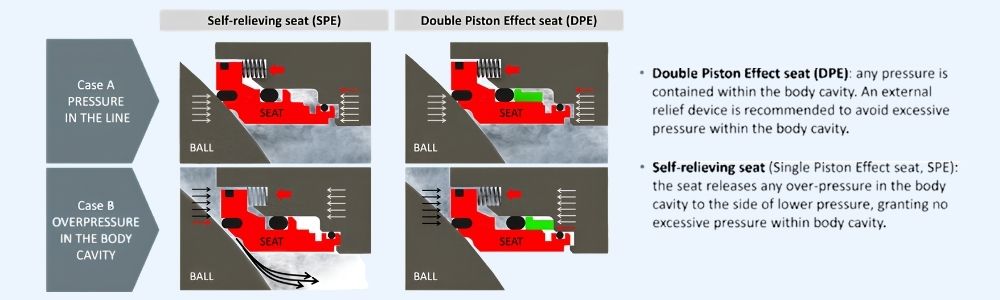
These configurations are important because the technique relies on controlling the pressure and sealing conditions within the valve body cavity.

Operators should confirm the specific valve design and its suitability for critical sealing before attempting the procedure. Valve type, seat design, pressure conditions, and available fittings can all affect whether the technique is appropriate.

Preparation Is Critical

Critical valve sealing involves significantly more preparation than a standard sealant injection.

Before the procedure begins, the valve should be properly flushed to remove contamination, old lubricant, sealant, or other material that may be present in the body cavity. Preparing the cavity helps ensure the emergency sealing material can perform as intended.

Determining the correct amount of sealant is also essential.

Unlike routine seat injection, critical valve sealing may require a substantial volume of material because the objective is to fill the entire valve body cavity. The quantity required can vary considerably depending on the valve size, manufacturer, and internal geometry.

For that reason, the valve should be evaluated before the procedure so the approximate cavity volume and required quantity of sealant can be calculated.

This is also where working with an experienced valve maintenance provider can be particularly important. CR Wall and Sealweld can assist operators in determining how much sealing material is required for a specific valve before work begins.

Specialized Equipment Is Required

Because of the volume of material involved, critical valve sealing also requires different equipment than many routine valve maintenance procedures.

Larger-capacity injection pumps may be required to deliver the necessary quantity of sealing material into the valve body cavity while working under pipeline pressure.

Technicians must also carefully monitor injection pressure throughout the procedure. Any decrease in pressure from within the valve body cavity can create a serious safety risk, which is one reason critical sealing should only be performed by technicians who understand the valve configuration, pumping equipment, and required procedure.

Critical Valve Sealing Is Temporary

Critical valve sealing should be viewed as a temporary isolation technique rather than a permanent valve repair.

Once the required downstream work has been completed, the emergency sealing material should be removed from the valve body cavity according to the appropriate procedure.

Products such as Sealweld Chameleon Sealant are designed so they can be flushed from the valve after the isolation is no longer required. The valve can then be prepared to return to normal operation.

The underlying reason the valve failed to seal should still be investigated. Critical sealing can help address the immediate isolation challenge, but it does not eliminate the need to assess the valve’s long-term condition and maintenance requirements.

Training and Expertise Matter

When applied to a suitable valve and performed correctly, critical valve sealing can be highly effective, but it also introduces significant safety considerations.

Technicians are working with pressurized infrastructure, high-pressure injection equipment, and a valve that has already demonstrated that it cannot provide the expected isolation. This is not a procedure that should be attempted without the appropriate training and experience.

CR Wall provides valve maintenance training led by our in-house valve maintenance expert, Joe Santos, and also works closely with Sealweld to connect operators with specialized training and technical support. Training can cover proper valve maintenance procedures, injection equipment, sealant selection, troubleshooting, and advanced techniques such as critical valve sealing.

For utilities and pipeline operators looking to strengthen their valve maintenance capabilities, CR Wall can help identify the right training approach for your team, whether that means working directly with Joe or coordinating specialized support through Sealweld.

Interested in valve maintenance training for your team? Contact CR Wall to discuss available training options and build a program around your equipment, applications, and maintenance needs.

Know the Option Before you Need It

A valve that fails to fully seal can quickly turn a routine maintenance project into a much more complicated isolation challenge.

Understanding critical valve sealing gives natural gas utilities another option when conventional maintenance techniques cannot restore the isolation required for downstream work. The key is recognizing when the procedure may be appropriate and involving experienced valve maintenance professionals before work begins.

If your organization has a ball or gate valve that continues to pass gas after conventional cleaning, lubrication, and sealing methods have been exhausted, contact CR Wall or Sealweld before attempting critical valve sealing.

Our teams can help review the valve design and seat configuration, assess whether critical sealing is a suitable option, calculate the approximate volume of sealing material required, and identify the equipment and technical support needed for the application.

For applications where critical valve sealing is appropriate, Sealweld Chameleon Emergency Sealant is designed for severe valve leakage where conventional sealing methods have been exhausted.

Dealing with a valve that will not fully isolate? Contact CR Wall to discuss the application with our valve maintenance team before proceeding.

Stay Up to Date With CR Wall

Quarterly Updates on New Products, Services and Industry Developments