

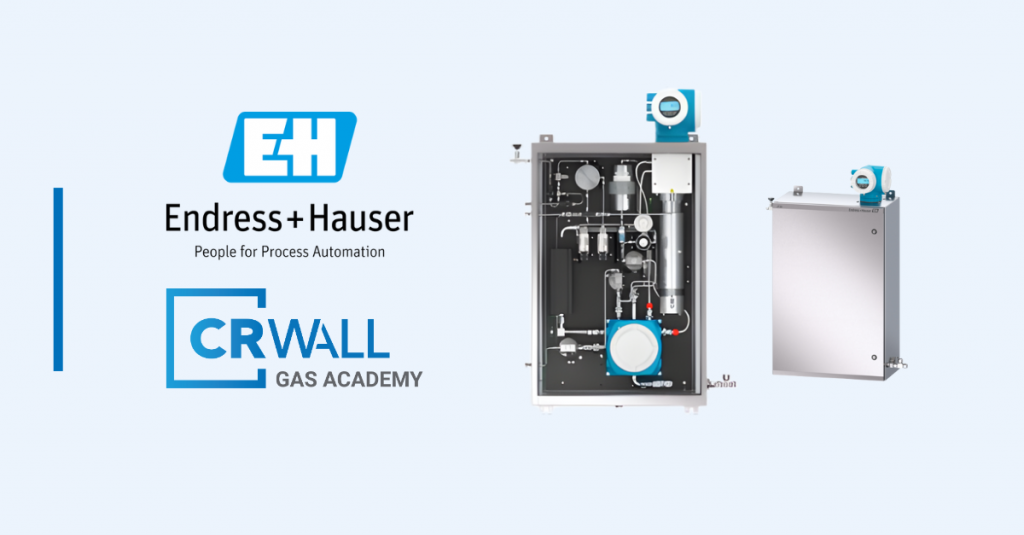
H₂S (Hydrogen sulfide) measurement is not new to the natural gas industry. However, how it is measured, maintained, and trusted in the field continues to evolve. The JT33 H₂S analyzer, developed by Endress+Hauser and employs Spectra Sensors tunable diode laser absorption technology is the result of decades of experience, customer feedback, and a clearly defined need for safe, reliable, low-maintenance H₂S monitoring in demanding operating environments.
To understand why JT33 matters, we spoke with product expert Dr. Zoe Reeve from Endress+Hauser Canada about the challenges that led to its development, what sets it apart, and why it is particularly relevant for Canadian natural gas operations.
The Origin of JT33: From Space Technology to Pipeline Safety
The roots of the JT33 extend further back than many realize. In the late 1990s, technology developed for NASA’s Jet Propulsion Laboratory was spun off into what became Spectra Sensors. The original goal was to measure moisture in extreme environments, including space exploration applications, such as Mars.
This early work focused on optical analysis designed to be highly reliable, low maintenance, and capable of long-term, continuous measurement. Those same characteristics proved to be exactly what the natural gas industry required, particularly for H₂S monitoring where safety, regulatory compliance, and asset protection are non-negotiable.
In natural gas operations, H₂S presents serious challenges. It poses direct risks to human health and safety, contributes to pipeline corrosion and equipment damage, and is tightly regulated, requiring accurate and continuous monitoring. JT33 exists to address these challenges with a measurement approach that is fundamentally more robust than traditional methods.
Who JT33 Was Built For
JT33 was specifically designed for low-range H₂S measurement applications, particularly in natural gas pipelines and processing environments.
From the beginning, the goal was to create an analyzer that operators could trust in real-world conditions. This includes accurate low trace-level H₂S measurement, minimal maintenance with field-serviceable components, high measurement uptime for reliable data, and simplified product selection by replacing multiple legacy “J” analyzers with a single standardized solution.
More than 20 years of customer feedback informed the final design. Endress+Hauser identified what worked, what did not, and what operators consistently asked for. The result is a single analyzer that combines:
- The necessary approvals and certifications for both Canada and the global market (C/USA CSA Class 1, Div1 and Class 1 Zone1, CRN, NACE to name a few)
- A wide measurement range (commonly up to ~0–500 ppm, application dependent and other ranges available upon request)
- A design focused on safety, reliability, and ease of ownership
For pipeline operators, JT33 plays a critical role in:
- Preventing corrosion
- Protecting personnel from H₂S exposure
- Reducing the risk of unplanned shutdowns or pipeline incidents
What Makes JT33 Different: Measuring H₂S Without Contamination
One of the most important and often misunderstood differences of the JT33 is how it measures H₂S. The analyzer uses TDLAS (Tunable Diode Laser Absorption Spectroscopy). Unlike many traditional measurement technologies, the detector is not in direct contact with the gas sample.
This design eliminates contamination, prevents buildup or fouling from the gas stream, and fully protects sensitive electronics. The laser measures the absorption signal of the H₂S molecule directly. This enables extremely high sensitivity, reliable low-concentration measurement using a patented differential spectroscopy technique, and long-term stability without drift caused by sensor contamination.
Low concentrations of H₂S are notoriously difficult to measure accurately. TDLAS technology excels in these applications when properly calibrated for the target concentration range.
Why Operators Should Care
For most operators, the fastest return on investment comes from risk reduction.
Reliable H₂S measurement helps protect infrastructure from corrosion, prevent unsafe conditions and potential incidents, avoid unplanned shutdowns, maintain regulatory compliance, and enable continuous real-time monitoring without introducing impurities into the gas stream.
Because the analyzer does not interfere with the sample, operators gain confidence that the measurement itself does not impact process quality or safety. Over time, reduced maintenance requirements, fewer site visits, and higher measurement uptime translate directly into lower operating costs.
Key Differentiators of the JT33
When compared with competing solutions, three differentiators stand out.
First is field serviceability. JT33 is designed for minimal maintenance, with service tasks that can be performed in the field, reducing downtime and dependence on specialized service visits.
Second is accurate low trace-level H₂S measurement. The TDLAS-based approach delivers stable and repeatable performance at very low concentrations.
Third is robust analyzer design. JT33 is built to perform reliably in harsh operating environments without sacrificing accuracy or uptime.
Built for Canadian Operating Conditions
Canadian natural gas operations present unique challenges, and JT33 was designed with these conditions in mind.
Key features include operation down to -20 degrees Celsius, suitability for remote and exposed installations with proper enclosure protection, Class I, Div 1 and Zone 1 hazardous area certification, ATEX and full CRN approvals, and the inclusion of all major certifications within a single product offering. This reduces engineering effort and simplifies project execution.
Integration, Upgrades, and Turnkey Solutions
JT33 is designed to integrate seamlessly into existing infrastructure and can often replace older H₂S analyzers directly. However, accurate gas analysis depends on more than the analyzer alone.
That is why Endress+Hauser works closely with CR Wall to deliver complete solutions that include proper sample extraction, correct sample handling and conditioning systems, and fully engineered turnkey analyzer packages.
As stated by Dr. Zoe Reeve, “you can have a great analyzer, but without the right sample handling system, the results will not be accurate”.
JT33 also supports plug-and-upgrade programs, allowing customers to modernize existing systems without starting from scratch.
Looking Ahead: Stability for the Next Decade
As the Canadian natural gas industry looks five to ten years ahead, several trends are clear. Operators need stable long-term measurement solutions, there is increased focus on safety, reliability, and regulatory compliance, and there is a growing preference for robust technologies that require minimal maintenance.
JT33 aligns directly with these needs. It is built on decades of experience, refined by real-world feedback, and supported by Endress+Hauser’s commitment to measurement excellence.
Final Thoughts
JT33 exists because the industry needed a better way to measure H₂S, one that prioritizes safety, reliability, and long-term performance. By combining proven TDLAS technology with a practical, field-ready design, it delivers what Canadian natural gas operators care about most, confidence in their measurement.
Learn More: JT33 Online Seminar with Endress+Hauser
Join Endress+Hauser for an upcoming JT33 online seminar focused on how TDLAS technology enables smarter, safer, and more reliable H₂S measurement for today’s demanding oil and gas environments.
During this session, experts will share practical insights on how JT33 supports improving gas quality, ensuring regulatory compliance, and protecting high-value infrastructure and assets.
Date: Tuesday, February 17
Time: 11:00 AM to 12:00 PM EST
Location: Online