

Introduction
Gas meters are a critical component of natural gas distribution systems. Their primary function is to accurately measure the volume or mass of gas flowing through a pipeline so that utilities can bill customers correctly, manage system capacity, and maintain safe and reliable operations. Across Canada, gas meters are deployed in a wide range of applications, from residential service to high pressure transmission metering and industrial custody transfer points, and with the development of modern smart metering, gas meters are also becoming a valuable source of data for gas utility companies.
Selecting the right gas meter is not a one size fits all decision. Metering requirements vary based on flow range, operating pressure, accuracy expectations, regulatory requirements, available installation space, and long-term operational considerations. As gas distribution networks continue to evolve with increased data needs and advanced monitoring, understanding the strengths and limitations of each metering technology is more important than ever.
This article provides a high-level overview of the most common types of gas meters used in natural gas distribution, with a focus on their principles of operation, typical applications, and practical considerations from CR Wall’s perspective.
Types of Gas Meters
Diaphragm Gas Meters
Principle of Operation
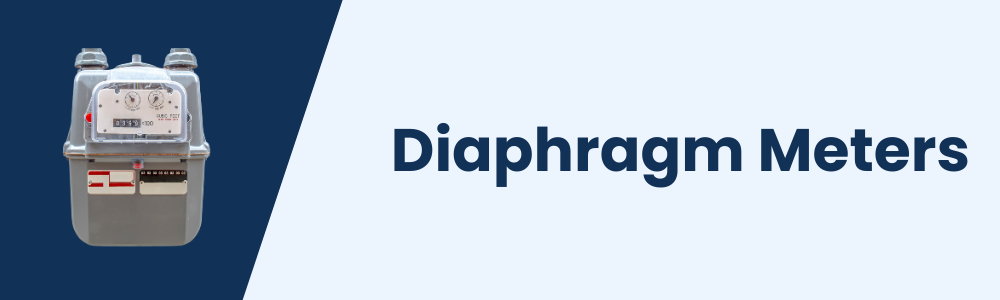
Diaphragm meters are positive displacement meters that measure gas by filling and emptying chambers formed by flexible diaphragms. As gas flows through the meter, it alternately fills each chamber, and the mechanical movement is translated into a volumetric measurement.
Typical Applications and Specifications
Diaphragm meters are most commonly used in residential and light commercial applications. They typically operate at low pressures and are well suited for low to moderate flow rates. These meters are generally used downstream of service regulators and are designed for long term, stable operation in outdoor environments.
CR Wall Thoughts and Considerations
Diaphragm meters are a proven, cost-effective solution with decades of field history. They offer good accuracy at low flows and require minimal power, often none at all. However, they have mechanical internals what can wear out over the meters service life. Their size and mechanical nature make them less suitable for higher flow applications or locations where advanced data collection is required without additional instrumentation.
Sweet Spot
Residential and small commercial services where simplicity, reliability, and low cost are the primary drivers.
Principle of Operation
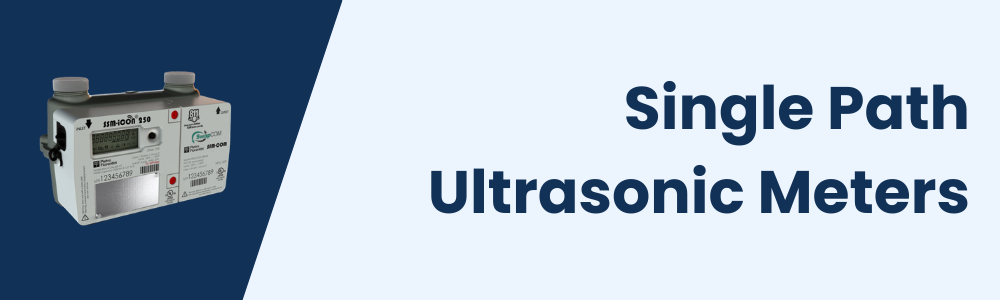
Single path ultrasonic meters measure gas flow by transmitting ultrasonic signals between two transducers along a single acoustic path. The difference in transit time between upstream and downstream signals is used to calculate flow velocity.
Typical Applications and Specifications
These meters are often used in light commercial and modern residential distribution applications where data collection, moderate accuracy and low pressure drop are required. They can operate across a wide range of pressures and flows, depending on design, and are well suited for installations where mechanical meters may be impractical.
CR Wall Thoughts and Considerations
Single path ultrasonic meters offer strong compatibility with digital data collection systems, and a key advantage is their fail open design, meaning gas flow can continue even in the event of an electronic or measurement failure. This makes them particularly attractive where uninterrupted gas service is essential. Accuracy can be influenced by flow profile and installation conditions, so proper upstream and downstream piping remains important.
Sweet Spot
Residential and light commercial services where simplicity, reliability, meter data collection and low cost are the primary drivers. Single path ultrasonic meters can be seen as a direct replacement for diaphragm meters in these applications.
Intermediate Ultrasonic Meters
Principle of Operation
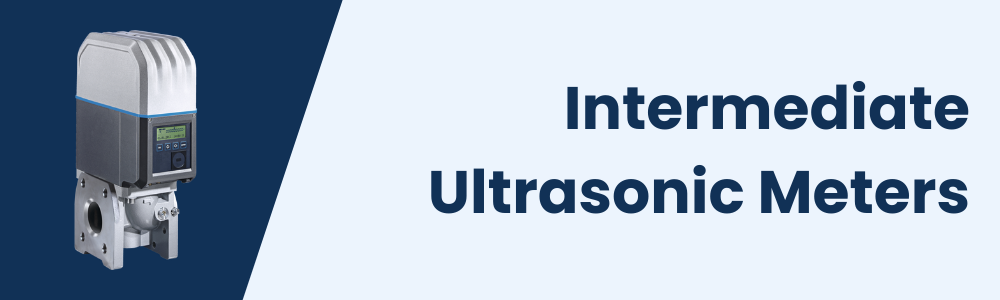
Intermediate ultrasonic meters bridge the gap between single path and multipath designs. They typically use more than one acoustic path to improve accuracy and flow profile compensation while maintaining a compact form factor.
Typical Applications and Specifications
These meters are used in mid range distribution and industrial applications. They can handle a broader flow range than single path meters and perform well in varying operating conditions. Additionally, they enable more sophisticated data collection when compared to single path meters.
CR Wall Thoughts and Considerations
Intermediate ultrasonic meters offer a balance between performance and cost. Like other ultrasonic technologies, they are fail open by design, allowing gas to continue flowing even if the meter experiences an electronic failure. This characteristic is highly valued for institutional and other critical loads. These meters reduce sensitivity to installation effects compared to single path designs while avoiding the complexity of larger multipath systems.
Sweet Spot
Mid sized industrial, distribution, and institutional (hospital, prisons, schools etc.) applications requiring improved accuracy, operational resilience, advanced data collection and uninterrupted gas flow. Intermediate ultrasonic meters can be seen as direct replacement for rotary meters, with the added benefit of being a fail open design.
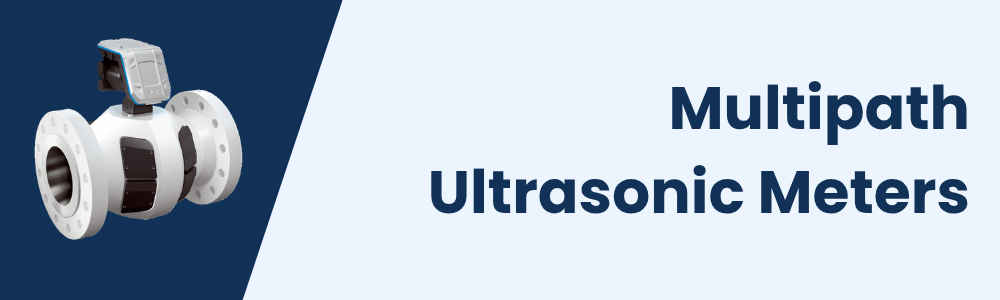
Principle of Operation
Multipath ultrasonic meters use multiple acoustic paths across the pipe to measure flow velocity at different locations within the gas stream. This allows for advanced flow profile compensation and very high accuracy.
Typical Applications and Specifications
These meters are widely used in high value custody transfer, transmission, and large distribution stations. They support large pipe diameters, high pressures, wide flow ranges and advanced data collection.
CR Wall Thoughts and Considerations
Multipath ultrasonic meters represent the leading edge of gas metering technology. They offer low pressure drop, minimal maintenance, and excellent accuracy. These meters are fail open by design, ensuring gas delivery is not physically blocked in the event of a meter failure. This makes them ideal for high consequence locations, including major institutional loads and critical infrastructure. Higher upfront cost and careful installation requirements should be factored into project planning. Maintenance and calibration planning are essential.
Sweet Spot
Custody transfer, transmission, and critical distribution points, including large institutional and infrastructure loads where accuracy, reliability, and continuous gas flow are essential.
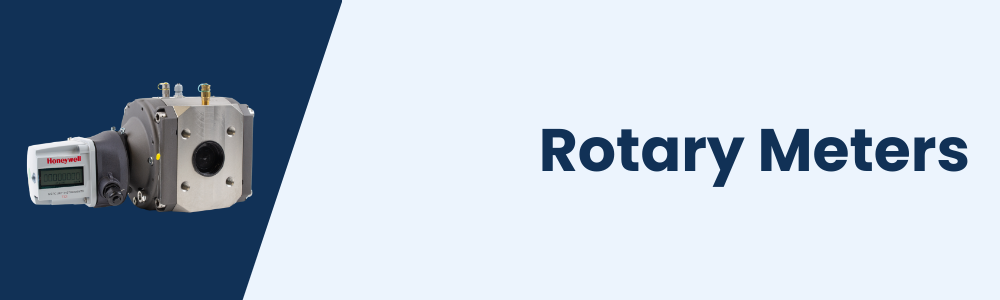
Principle of Operation
Rotary meters are positive displacement meters that use two rotating lobes to measure gas volume. As gas passes through the meter, the lobes rotate at a speed proportional to flow rate.
Typical Applications and Specifications
Rotary meters are commonly used in industrial and large commercial applications. They handle higher flow rates than diaphragm meters and can operate at higher pressures. They are often paired with electronic volume correctors to compensate for pressure and temperature.
CR Wall Thoughts and Considerations
Rotary meters are robust and well understood by utilities. They provide high accuracy and excellent repeatability across a wide flow range. They introduce a moderate pressure drop in operation, and, as with Turbine meters, maintenance and calibration are essential. Like other mechanical meters, they may experience wear over time due to moving parts. To ensure optimum performance, follow best practices during installation to remove debris and liquids from the gas supply to the meter.
Sweet Spot
Industrial and commercial metering where accuracy and proven performance are critical.
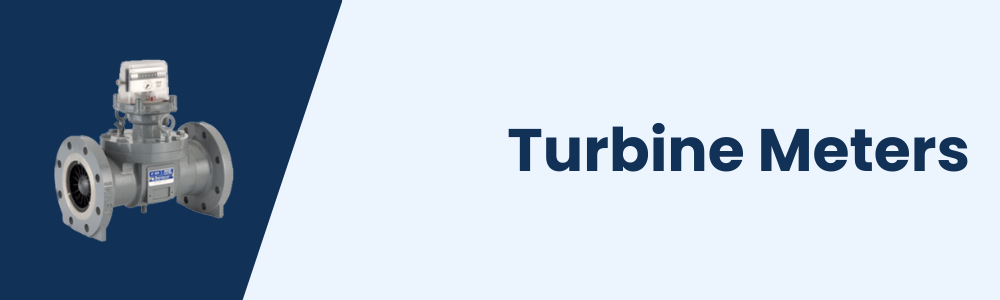
Principle of Operation
Turbine meters measure gas flow by using the velocity of the gas to spin a turbine rotor. The rotational speed is proportional to the flow rate.
Typical Applications and Specifications
Turbine meters are commonly used in high flow, high pressure applications, including transmission and large industrial sites. They require stable flow conditions and straight pipe runs to achieve optimal accuracy.
CR Wall Thoughts and Considerations
Turbine meters are well suited for high volume measurement and have a long history in custody transfer applications. However, they are sensitive to flow disturbances and can experience wear over time due to moving parts. As with Rotary meters, maintenance and calibration are essential.
Sweet Spot
High flow industrial and transmission related metering where space and straight run requirements can be met.
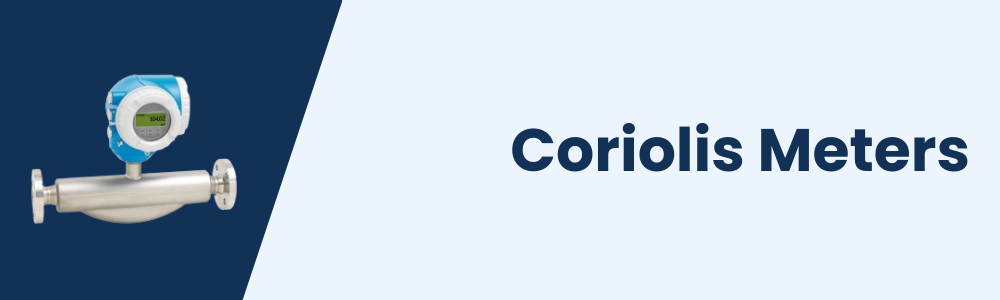
Principle of Operation
Coriolis meters measure mass flow directly by detecting the vibration and phase shift of oscillating flow tubes as gas passes through them. This technology also provides direct density measurement.
Typical Applications and Specifications
Coriolis meters are used in specialized applications where mass flow measurement and high accuracy are required. They can operate across a wide pressure range but are generally limited to lower line sizes and flows compared to ultrasonic or turbine meters.
CR Wall Thoughts and Considerations
Coriolis meters deliver exceptional accuracy and rich measurement data. They are compact and less dependent on flow profile. The main limitations are cost, pressure drop, and practical size constraints for larger distribution lines.
Sweet Spot
Specialty industrial applications, calibration systems, and locations where mass flow and density data provide added value.
Conclusion
Selecting the right gas meter involves balancing many inputs, including flow range, pressure, accuracy requirements, installation constraints, and total cost of ownership. No single technology is ideal for every application.
Looking forward, utilities must also consider evolving requirements such as regulatory certifications, advanced data collection, cybersecurity, maintenance strategies, and physical space limitations at meter sites. As gas distribution systems modernize, thoughtful meter selection will continue to play a key role in system performance, safety, and operational efficiency.
CR Wall works closely with utilities across Canada to evaluate these factors and support informed metering decisions that align with both current needs and future system goals.